



NDIS Behaviour Support Plans Perth: What Parents and Referrers Need to Know
This article is for parents and NDIS providers looking for NDIS Behaviour Support Plans in Perth. The information below explains PBS plans, what a quality plan looks like and what steps to expect.
If you need an NDIS behaviour support plan in Perth, make an online referral here, on our website. Anyone can make a referral, including NDIS participants, parents, guardians, teachers, support coordinators, medical and allied health providers.
NDIS Behaviour Support Plans Perth
What do quality NDIS behaviour support plans look like in Perth?
At Ability Consultants, we practice a person-centred, evidence-based approach to our support. We ensure our NDIS behaviour support plans are collaboratively developed through person-centred planning that ensures all stakeholders are represented and agree to its outcome, with a central focus on the participant. A plan must emphasise a long term, proactive approach, rather than being reactive and short term.
In Positive Behaviour Support, what does it mean to be person-centred?
An NDIS behaviour support plan must emphasise the person’s goals, strengths and preferences. If they have a preferred communication style, it should also be documented and articulated throughout the plan. Positive Behaviour Support should also consider factors such as cultural background, family context, sensory profile and disability related needs. Overall person-centred planning creates a tailored, well thought out plan, rather than a cookie cutter generic approach with little thought or reason.
What steps do you take to ensure each participant is involved in the development of their NDIS behaviour support plan in Perth?
As a parent or NDIS provider, you might be wondering how we ensure our behaviour support plans are person-centred.
Building Understanding
All plans should start with building understanding and gathering information. This step is vital in the approach of creating a plan that reflects the person it represents. It can look like meeting with the participant and central people to their life and reviewing documentation.
Identifying what matters most
Identifying what is meaningful to the participant is essential in ensuring their world is understood, and the plan works alongside their life. This can look like quality of life assessments, which explore relationships, community, independence, sensory need, cultural identity and their personal aspirations.
Designing the plan
Strategies and support approaches need to have awareness of the context it is used, and the overall effects it could have on the participant it supports. Person centred planning will identify how a plan will support the participant to meet their goals, clarify the roles of each person involved, include communication supports and environmental adjustments along with clear considerations for choice, autonomy and collaborative effort.
Once a participant is allocated their practitioner, what does NDIS Positive Behaviour Support look like?
Once Ability Consultants allocates a practitioner in Perth, a service is ready to start, and the participants' behaviour support practitioner will start the initial stages.
Initial Phone Call
This call is an introduction to the practitioner, an invitation for future collaboration and a time to set up the initial meeting. The practitioner will also seek any documentation that will help them understand the participant.
Initial Meeting
This is a listening session designed to help the practitioner understand the participant's story. The practitioner will set goals with the participant and stakeholders, ask many questions about historical and current information, while also giving an overview of the service and delivery method. Due to legislative requirements that all restrictive practices must be reported to the NDIS commission within 30 days of allocation, a restrictive practice audit will be conducted.
Follow-up Meetings
Positive Behaviour Support is adjusted to the needs of the participant. This will mean the delivery of the service will be tailored to the participant and how they would like to engage in Positive Behaviour Support. Generally, follow up meetings will cover quality of life, behaviours of concern, environmental considerations and discuss relevant incidents as they occur. The goal is for the practitioner to build understanding of the person in order to write with person-centreness.
Preparation to write the plan
Once the practitioner feels they know the participant well enough, and they have evidence based information to work from, and a good understanding of the person’s needs, they will write the behaviour support plan, with collaboration and person-centreness always in mind.
Plan Implementation
Once the plan is written, agreed to be implemented by all parties involved, training on the plan takes place to ensure all parties understand their role and responsibilities in creating change. From there, on-going coaching and data tracking will test if the plan is meeting the needs of the participant, or needs further adjustment to ensure it is effective.
You can find more information about what to expect from your NDIS behaviour support practitioner here.
As you develop a participant’s NDIS behaviour support plan, how do you plan to ensure their NDIS funds are used in the most effective way, for the benefit of the participant?
We always aim to be collaborative. Depending on what the goals are, we check in with you each step of the way to make sure funds are being spent where the need is, within the scope of the budget.
Travel is also an important factor to consider; Ability Consultants tries to ensure participants are within a certain distance of their practitioner and seek to minimise expenditure on travel costs.
About Patrick Rundle, Behaviour Support Practitioner Perth
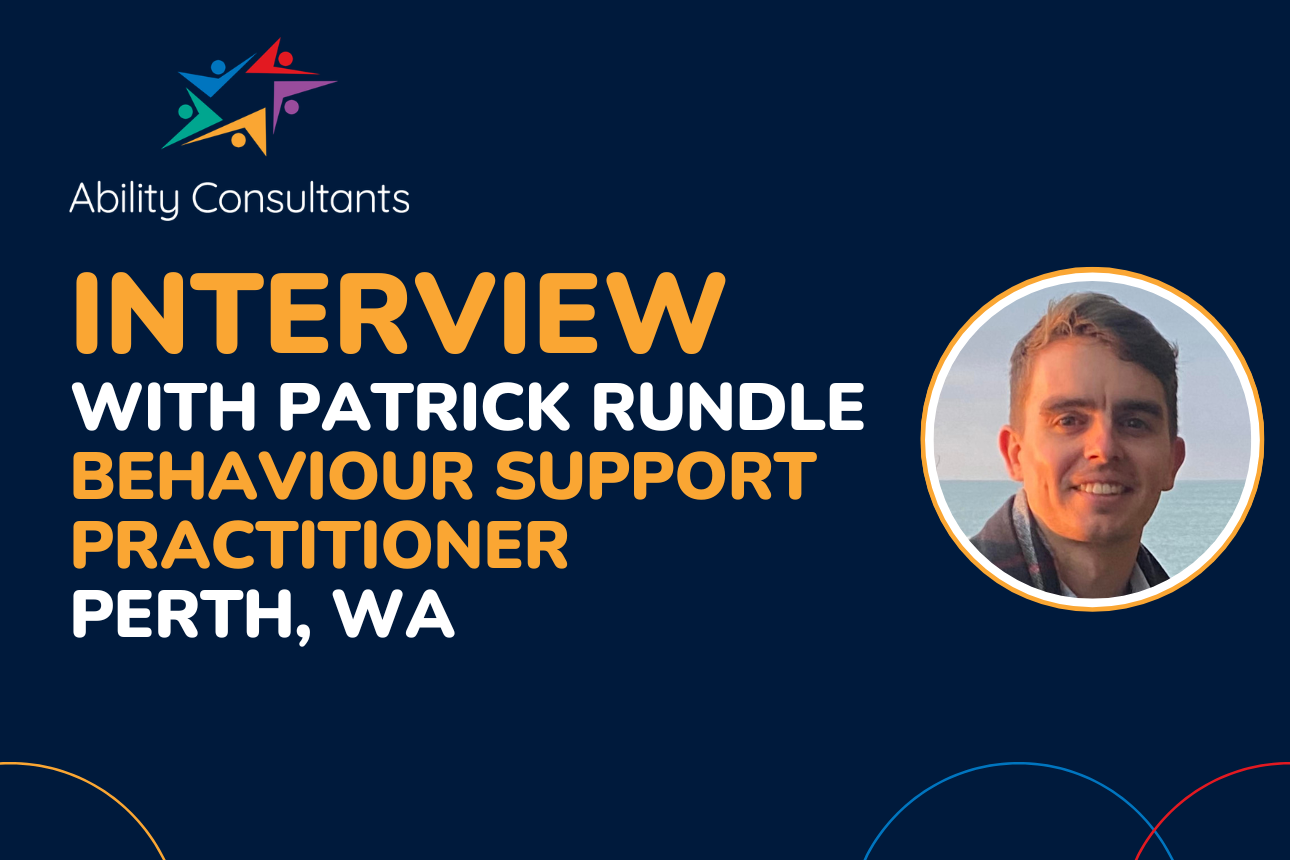
Patrick, tell us about your experience with NDIS behaviour support plans.
Positive Behaviour Support is an incredibly rewarding job. Being able to help participants, families and their care network through collaborative approaches, which include person-centred planning, provides an excellent opportunity to help those in need. I pride myself on how well my plans reflect the participant I write about and celebrate positive feedback from other stakeholders when it is being implemented, and demonstrating positive impact on those it assists.
What are key principles you have learned about supporting NDIS participants through Positive Behaviour Support?
Every participant is unique from each other. It is always important to approach every situation with a belief that the person has a clear sense of their preferences, knowledge of their choice and understanding of how their world works around them.
A person-centred PBS plan has the capability to capture a misunderstood version of their reality that others may overlook. I hope to make a difference to their lives and provide clear and inclusive strategies that will help improve that person’s quality of life.
What would you say are some of the highlights of your career in Positive Behaviour Support?
I have experience working within specialty education units, dedicated to children with complex diagnoses and regularly displaying behaviours of concern. I have seen first hand the positive impact the staff and teacher have on these children in building their independence and capacity to engage in the world around them through their personalised curriculum and environmental adjustments.
My highlight has been a successful behaviour support plan across one year leading to the family being given the confidence and support to transition their child into a school that fits their needs. To see them play with other children, while still being the best version of themselves was excellent.
You lead our team of behaviour support practitioners in Perth. Where do you provide support and what plans do you have for the future in WA?
In Perth we provide coverage from Alkimos right down to Rockingham. We take on participants outside of that range on a case by case basis if we are able to make the funding work for them and still ensure quality behaviour support can still be delivered.
We hope to service those in the community who struggle to find quality positive behaviour support in Western Australia. We have plans to continue to expand south to cover Mandurah, Bunbury and hopefully the South West.
NDIS Behaviour Support Plans in Perth: FAQs
Perth PBS services: costs and funding — does my child qualify for NDIS PBS in Perth?
We have detailed articles which explain which NDIS funds you can use for Positive Behaviour Support in Perth:
- Which NDIS funds can I use for Positive Behaviour Support?
- Frequently Asked Questions about NDIS funding for Positive Behaviour Support
What is the NDIS PBS referral process in Perth? How long does it take to get an NDIS behaviour support plan?
The first step is to make an online referral on our website. From there, our admin team will work hard to ensure all essential requirements have been met in order to start services. This includes information about the participant’s NDIS goals, funding and funding period schedules, before a service agreement is drafted and signed.
Once a practitioner is allocated, the practitioner will work at the pace of need of the participant to understand their situation, ensure existing restrictive practices are audited, an Interim Behaviour Support Plan is written (if restrictive practices are found) and a comprehensive behaviour support plan is written in a timely manner.
What changes or improvements can participants and their families expect from NDIS Positive Behaviour Support in Perth?
Positive Behaviour Support looks to simultaneously increase a participant's quality of life, while also reducing behaviours of concern. We look for key indicators of a person’s quality of life and look to make immediate changes that will help them succeed within their everyday environment. Then we look at making long term improvements in all other aspects of quality of life. I hope to reduce the frequency, intensity and duration of the present behaviours of concern over time.
While immediate changes may have some effect, long term change comes from successful proactive strategies which look to replace the behaviour with a more functional outcome. The pace of change varies from participant to participant. Some can expect quick changes while others may need to wait for external factors outside of their control to see long lasting change.
What if participants are unsure if PBS is right for them?
Participants have full control to start and stop services in alignment with their needs. At Ability Consultants, we are here to help in the long term and service the participant when they are ready to engage in Positive Behaviour Support. We are also happy to connect you with a regional lead, who is also an NDIS behaviour support practitioner, to discuss if Ability Consultants is the right fit for their situation before a referral is made. We are flexible and are happy to help when help is required.
Please feel welcome to contact our team about NDIS behaviour support in Perth, or call us on 1300 694 625.
Contributors
Reviewed by Patrick Rundle MTeach, BCom, M.BSPA, Behaviour Support Practitioner and Regional Development Lead Team Leader, Perth
Patrick is a Behaviour Support Practitioner and Professional Member of Behaviour Support Practitioners Australia. He holds a Masters degree and has extensive experience supporting participants with autism. Patrick supports NDIS participants directly and also leads a team of Behaviour Support Practitioners in Perth.
Reviewed by Belinda Thurlow RMT (AMTA), MCMT, BMus, Provisional Psychodynamic Psychotherapist (ANZAP), Proficient Behaviour Support Practitioner, Brisbane
An experienced behaviour support practitioner, Belinda takes a warm, person-centred approach to supporting participants. She works closely with participants, their families and support teams to understand underlying causes and implement positive interventions that build skills and improve quality of life. Belinda’s qualifications in Music Therapy and Psychodynamic Psychotherapy further enhance her work in Positive Behaviour Support.

 Virtual
  In-person