


NDIS Behaviour Support for children in Bankstown: Q&A with PBS practitioner Ronelle Jundi
If you’re a parent in Bankstown looking for NDIS behaviour support for your child, we hope this article helps you. In this article, we outline how Positive Behaviour Support can make a difference in your child’s life. We also explain what you can expect and we introduce your local behaviour support practitioner, Ronelle Jundi.
How does NDIS behaviour support help children with disability?
If you are new to Positive Behaviour Support (PBS), it can be helpful to think of it as a way of understanding what your child is experiencing and finding ways to make everyday situations easier for them.
Children communicate in many different ways. Sometimes behaviour can tell us that a child is frustrated, overwhelmed, tired, confused, or perhaps they are trying to get their needs met or they are finding a situation difficult. Instead of looking only at the behaviour itself, PBS helps us understand what may be contributing to it and what support your child needs.
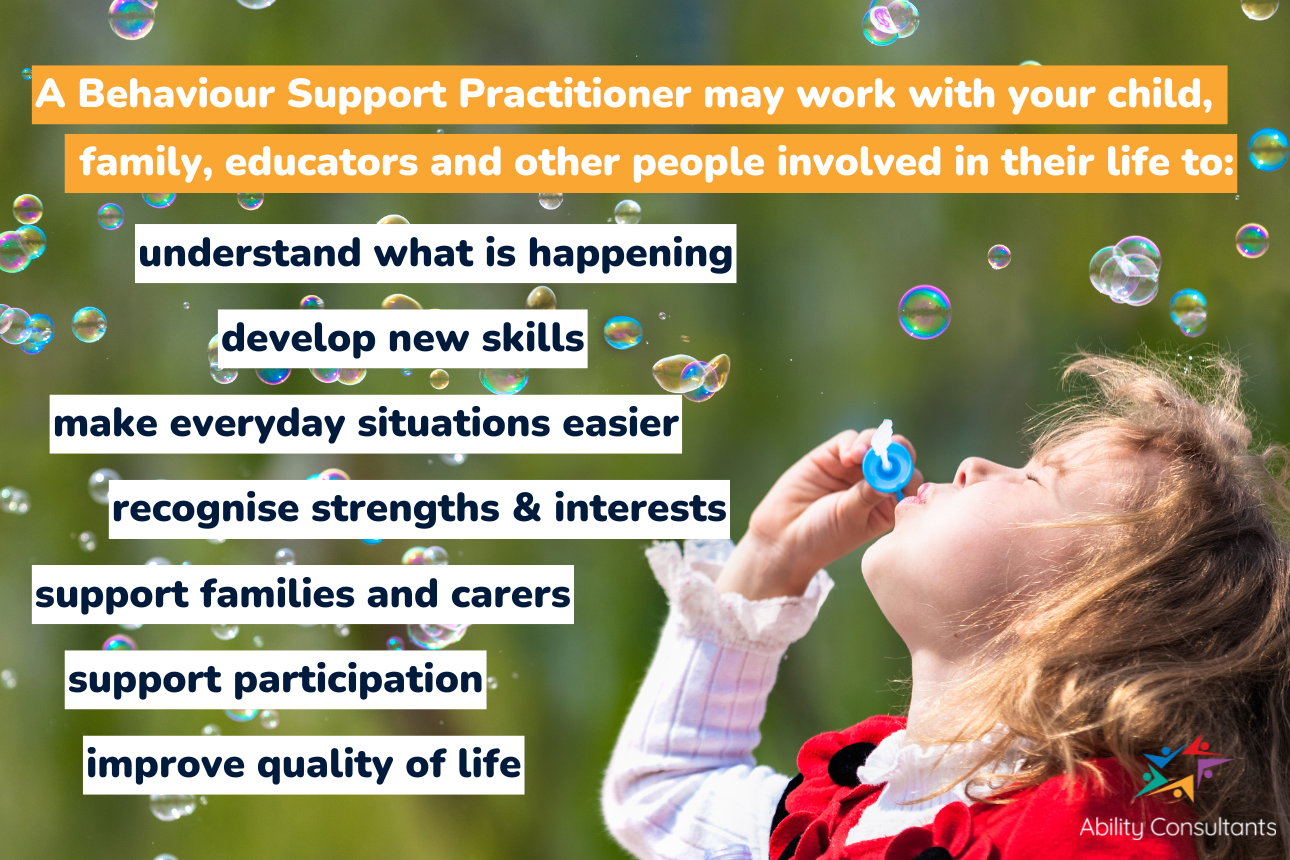
A Behaviour Support Practitioner may work with your child, family, educators and other people involved in their life to:
- Understand what is happening: Look at when and where behaviours occur, what happens around them and what your child may be communicating through their behaviour.
- Develop new skills: Support your child to learn different ways of communicating, asking for help, coping with difficult situations, making choices and managing changes.
- Make everyday situations easier: Consider whether routines, communication, expectations or the environment can be changed to better suit your child.
- Recognise strengths and interests: As a starting point for learning and development, build on your child’s interests, strengths and existing skills.
- Support families and carers: Provide practical strategies that can be used in everyday situations and adapted as your child's needs change.
- Support participation and quality of life: The aim is to help your child communicate their needs, take part in activities, develop independence and have positive experiences with the people around them.
PBS is not about blaming a child or their family when behaviour is difficult. Instead, it encourages us to look at the whole situation and consider what your child might be experiencing, what they are trying to communicate and what changes could make things more manageable.
An example of how NDIS behaviour support can help
Imagine Liam, a seven-year-old child with autism (Level 2), who becomes upset and throws toys when it is time to leave the playground.
Rather than simply expecting Liam to stop throwing things, his behaviour support practitioner would try to understand why leaving is difficult for him. They may discover that unexpected changes and moving away from an activity he enjoys are particularly challenging.
The team might then introduce a predictable transition routine. Liam could receive a warning before it is time to leave, use a visual timer and have the steps of the transition explained to him in a way he understands. These supports give him time to prepare for the change and provide him with clearer information about what is going to happen next.
Over time, the goal is not simply for Liam to stop throwing toys. It is to help him develop a way of managing transitions that works for him, while making it easier for the adults around him to understand and support his needs.

What can families in Bankstown expect from children’s behaviour support?
Every child communicates their needs differently. Your local behaviour support practitioner in Bankstown will look beyond what your child is doing, to understand what they may be trying to communicate.
Your behaviour support practitioner will get to know your child, including their strengths, interests, needs and everyday experiences. Working with parents and carers, they will explore situations that may contribute to behaviours of concern and develop practical strategies to support your child.
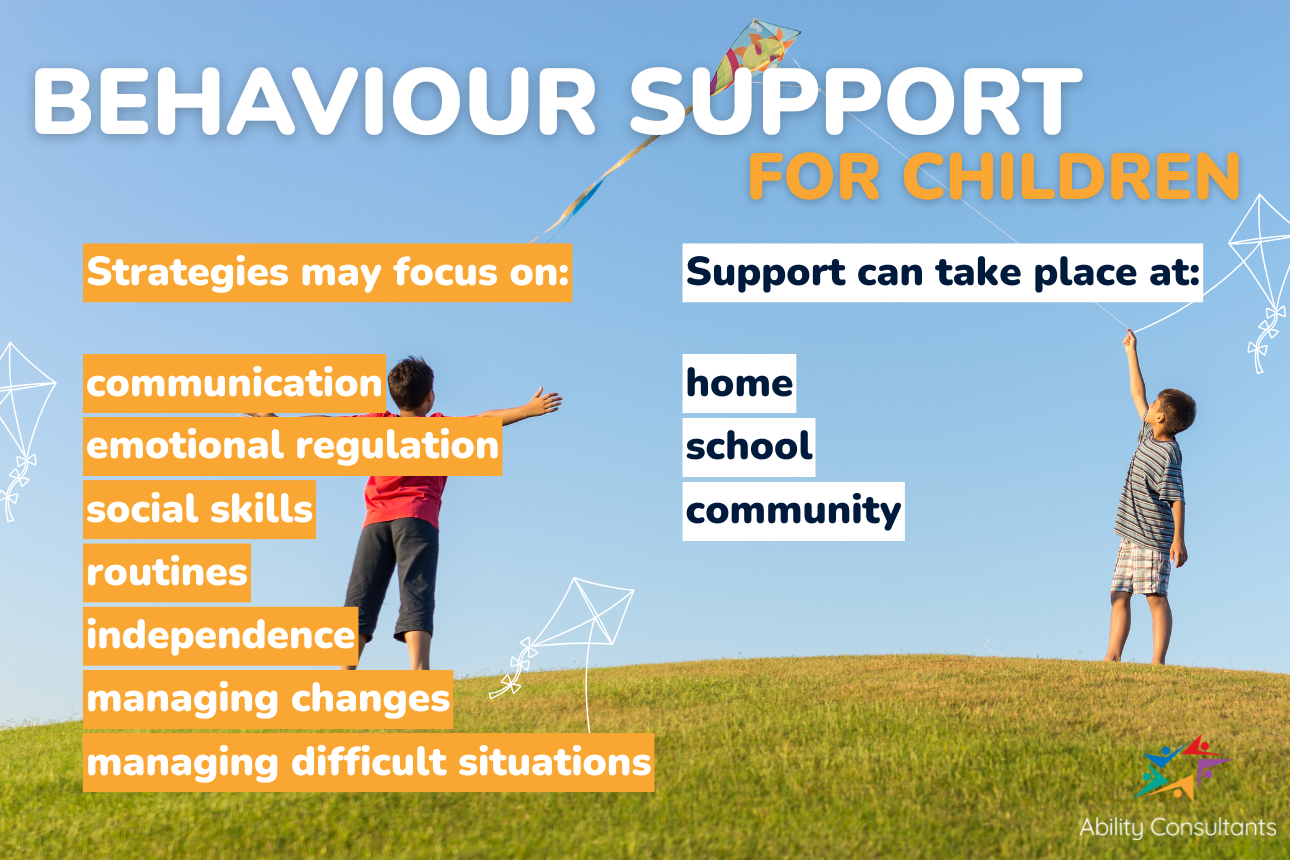
Strategies may focus on communication, emotional regulation, social skills, routines, independence and managing changes or difficult situations. Support can take place at home, school or in the community, depending on your child’s needs and goals.
Parents and carers remain involved throughout the process, with practical guidance they can use in everyday life. We don’t simply provide a plan and leave you to implement it on your own. We work alongside children, families and their support teams to put strategies into practice, provide ongoing guidance and adapt approaches as needs change.
What NDIS behaviour support services do you offer in Bankstown for children and young people?
We provide personalised NDIS behaviour support for children and young people in Bankstown, helping families understand behaviour, develop practical skills and create positive changes across everyday life.
Our child-centred approach focuses on each young person’s strengths, needs and goals. We work alongside families, carers and other supports to develop practical strategies that are easy to use and suited to home, school and community settings.
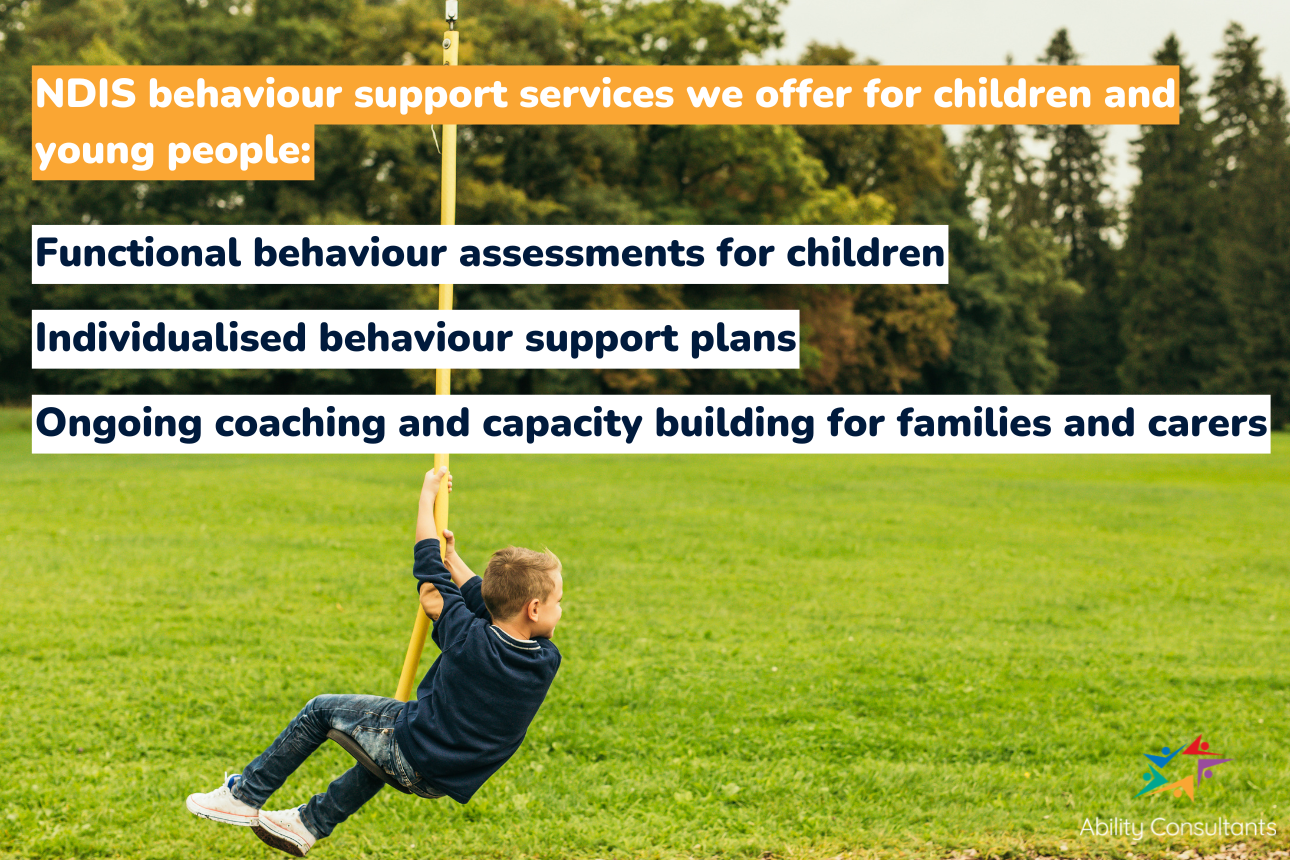
Functional behaviour assessments for children
Functional behaviour assessments help us understand the reasons behind behaviours of concern. We consider what happens before, during and after a behaviour to better understand what may be driving it. This helps us recognise your child’s needs and create practical strategies that provide meaningful support.
Individualised behaviour support plans for NDIS participants
We develop a tailored behaviour support plan based on your child’s strengths, needs, goals and circumstances. Strategies are designed to support communication, emotional regulation, independence and participation in everyday activities.
Ongoing coaching and capacity building for families and carers
We work alongside parents, carers and support teams to build their skills and confidence. Families receive practical guidance and coaching so they can use supportive strategies consistently in everyday situations.
Who do you support in Bankstown?
We provide behaviour support for children, young people and adults with disability across Bankstown and nearby areas. Our support is shaped around each person—their abilities, needs, goals and the situations they experience in everyday life.
Children with autism and developmental differences
We support children with autism (ASD) and other developmental differences who may need help with communication, emotional regulation, routines, social skills or everyday behaviours.
Children with complex behaviours and high support needs
We work with children who experience more complex or frequent behaviours and require additional support to participate safely and confidently at home, school and in the community.
Parents, families, schools and support workers
We work alongside the people who are part of each person’s life, including parents, families, carers, schools, support workers and other professionals. By working together, we can create consistent approaches that make sense across different environments.
Adults with disability in Bankstown and surrounds
Our team provides behaviour support for adults with disability across Bankstown and surrounding areas, ensuring people can access support that is tailored to their individual needs and goals.
How do parents access NDIS behaviour support for their child in Bankstown?
As a parent, you can make an online referral for Positive Behaviour Support on your child’s behalf.
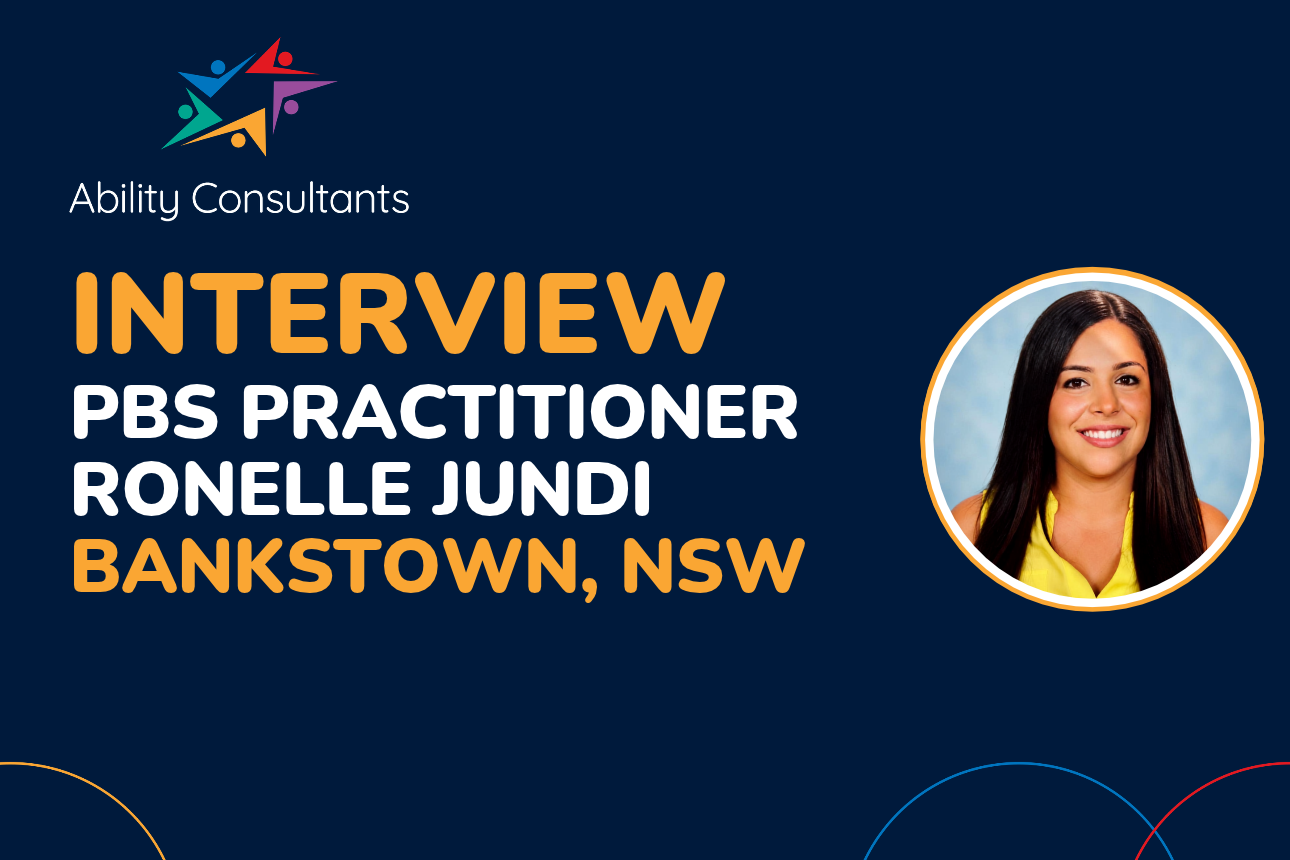
About Ronelle Jundi, Behaviour Support Practitioner in Bankstown
Ronelle, tell us about you.
I’m Ronelle Jundi, a Behaviour Support Practitioner with a background in education and disability support. I hold a Bachelor of Arts from Western Sydney University and a Master of Teaching (Primary). I am also trained in the Early Start Denver Model (ESDM) through the Advanced Workshop.
I have worked in the disability sector since 2016, supporting young children through early intervention and helping them reach their full potential. My background in primary school education has given me valuable experience in working closely with children, families and other service providers to understand individual needs and create meaningful opportunities for growth.
I’m passionate about helping children and young people develop their communication, social, practical and everyday skills, while ensuring these skills can be used across different environments. I take a collaborative, family-centred approach and enjoy working alongside families and support teams to help each individual feel confident, included and supported.
How does your experience as a teacher shape your approach to Positive Behaviour Support?
My experience as a teacher has taught me to look beyond a child’s behaviour and understand what they may be trying to communicate or what support they may need. Working in primary education showed me the importance of creating a safe, structured and inclusive environment where every child can learn in a way that works for them.
This experience shapes my approach to Positive Behaviour Support by helping me focus on each child’s strengths, individual learning style and developmental needs. My goal is to help children build skills, confidence and independence while supporting them to participate meaningfully in everyday life.
Positive Behaviour Support is about improving a person’s quality of life — what does this actually mean for a child and their family?
For a child, improving quality of life means supporting them to feel safe, understood and able to participate in the things that matter to them. Positive Behaviour Support looks beyond the behaviour itself and considers what the child may be communicating, what they need and what skills could make everyday situations easier. This may include developing communication skills, learning ways to manage big emotions, building relationships, making choices or becoming more independent with everyday activities.
For families, this can mean gaining a clearer understanding of their child and having practical ideas for responding to situations that can be challenging. The right support can make routines more manageable, reduce stress and create more opportunities for positive experiences together. Ultimately, the aim is to support their child and their family to feel more connected, confident and able to enjoy everyday life.
The term “person-centred” is referred to quite often in behaviour support — what does this actually look like and how do you deliver on this as a behaviour support practitioner?
To me, being person-centred means getting to know the child behind the behaviour. I believe every child has their own personality, strengths, interests and way of communicating, so I take the time to understand what matters to them and what helps them feel comfortable and supported. I also value working in partnership with families and other people in the child’s life, as they have important knowledge and insight into the child’s needs, experiences and goals.
As a Behaviour Support Practitioner, I aim to develop strategies that are realistic, meaningful and easy to incorporate into a child’s everyday routines. Rather than focusing only on changing behaviour, I look at what the child may be communicating and how we can support them in a way that respects their individual needs.
My goal is to help children feel heard and understood while developing their confidence, independence, communication and ability to build positive relationships. I believe that when children are supported in a way that works for them, they are better able to learn, participate and experience success in their everyday lives.
Positive Behaviour Support in Bankstown: Frequently Asked Questions
How long does a behaviour support plan last?
A behaviour support plan should be regularly monitored and updated to make sure it continues to reflect your child’s needs, progress and goals. Where a plan includes regulated restrictive practices, it must be reviewed at least every 12 months, or sooner if your child’s circumstances or support needs change.
For families, this means a behaviour support plan is not something that is simply written and forgotten. We regularly check what is working, celebrate progress and make changes when needed, so the support continues to be useful and relevant as your child grows and develops.
Can we get urgent or interim behaviour support?
If a child has an immediate need for behaviour support, an interim behaviour support plan may be put in place to provide support while a more detailed assessment and comprehensive plan are being developed. The purpose of an interim plan is to respond to immediate concerns, identify potential risks and provide practical strategies that can help prevent behaviours from occurring and reduce the risk of harm.
An interim plan provides families and the people supporting their child with clear, practical guidance during this period. It is intended to provide a safe and supportive starting point while we work towards developing a more comprehensive understanding of the child’s needs and the strategies that will best support them.
If safety is an immediate concern, we highly recommend calling emergency services on 000.
Do you work with schools and early childhood services in Bankstown?
Yes. Where it is relevant to a child’s needs, we work with their school, preschool or early childhood service across Bankstown to help provide consistent support. We collaborate with educators, teachers, families and other professionals to understand each child’s needs and develop practical strategies that can be used across different settings.
Our goal is to create a consistent and supportive approach that helps children feel safe, included and confident at home, school and in the community.
How do I know if my child’s NDIS Plan includes funding for behaviour support?
We have a couple of articles that can help you identify if your child’s NDIS Plan includes funds for behaviour support. It’s important to note that behaviour support has its own, dedicated funding category, and that behaviour support is not the same as psychology. If you have a support coordinator or local area coordinator, they may be able to help you understand your child’s NDIS funding and how it applies to Positive Behaviour Support. You are also welcome to contact our team if you are unsure.
Where is your clinic in Bankstown?
Ability Consultants is a Registered NDIS Provider in Bankstown, however we do not have a clinic that is open to the public. Instead, we travel to you, saving you time, fuel and the stress of navigating traffic and other logistics.
We provide Positive Behaviour Support throughout Bankstown and surrounding areas including Bankstown, Bass Hill, Belmore, Birrong, Campsie, Canterbury, Chester Hill, Chullora, Condell Park, Earlwood, Georges Hall, Greenacre, Lakemba, Lansdowne, Milperra, Mount Lewis, Padstow, Padstow Heights, Panania, Picnic Point, Potts Hill, Punchbowl, Regents Park, Revesby, Revesby Heights, Riverwood, Roselands, Sefton, Villawood, Wiley Park, Yagoona.
Our practitioners also provide behaviour support throughout South West Sydney, including Liverpool. Here’s an interview with Becki, behaviour support practitioner in Liverpool.
How can my child get started with NDIS Behaviour Support in Bankstown?
The first step is to make a referral for Positive Behaviour Support on our website. If you have any questions about Positive Behaviour Support, please feel welcome to call our team on 1300 694 625 or send a message using our contact form.
Contributors
Written by Ronelle Jundi MTeach (Primary) BA, Behaviour Support Practitioner, Sydney
Ronelle has over ten years experience supporting young children with early intervention in the education sector. Ronelle is passionate about creating opportunities for individuals to develop their conceptual, practical and social skills while also facilitating training of skills across all settings working closely with other service providers.
Reviewed by Belinda Thurlow RMT (AMTA), MCMT, BMus, Provisional Psychodynamic Psychotherapist (ANZAP), Proficient Behaviour Support Practitioner, Brisbane
An experienced behaviour support practitioner, Belinda takes a warm, person-centred approach to supporting participants. She works closely with participants, their families and support teams to understand underlying causes and implement positive interventions that build skills and improvise quality of life. Belinda’s qualifications in Music Therapy and Psychodynamic Psychotherapy further enhance her work in Positive Behaviour Support.

 Virtual
  In-person