


Positive Behaviour Support Toowoomba: Meet Dominique Gillespie

Get started with Positive Behaviour Support in Toowoomba, Queensland. We support NDIS participants with behaviour support in Toowoomba, Lockyer Valley and throughout Darling Downs. Click here to make a referral for behaviour support anytime or read on to learn more about your local behaviour support practitioner, Dominique Gillespie.
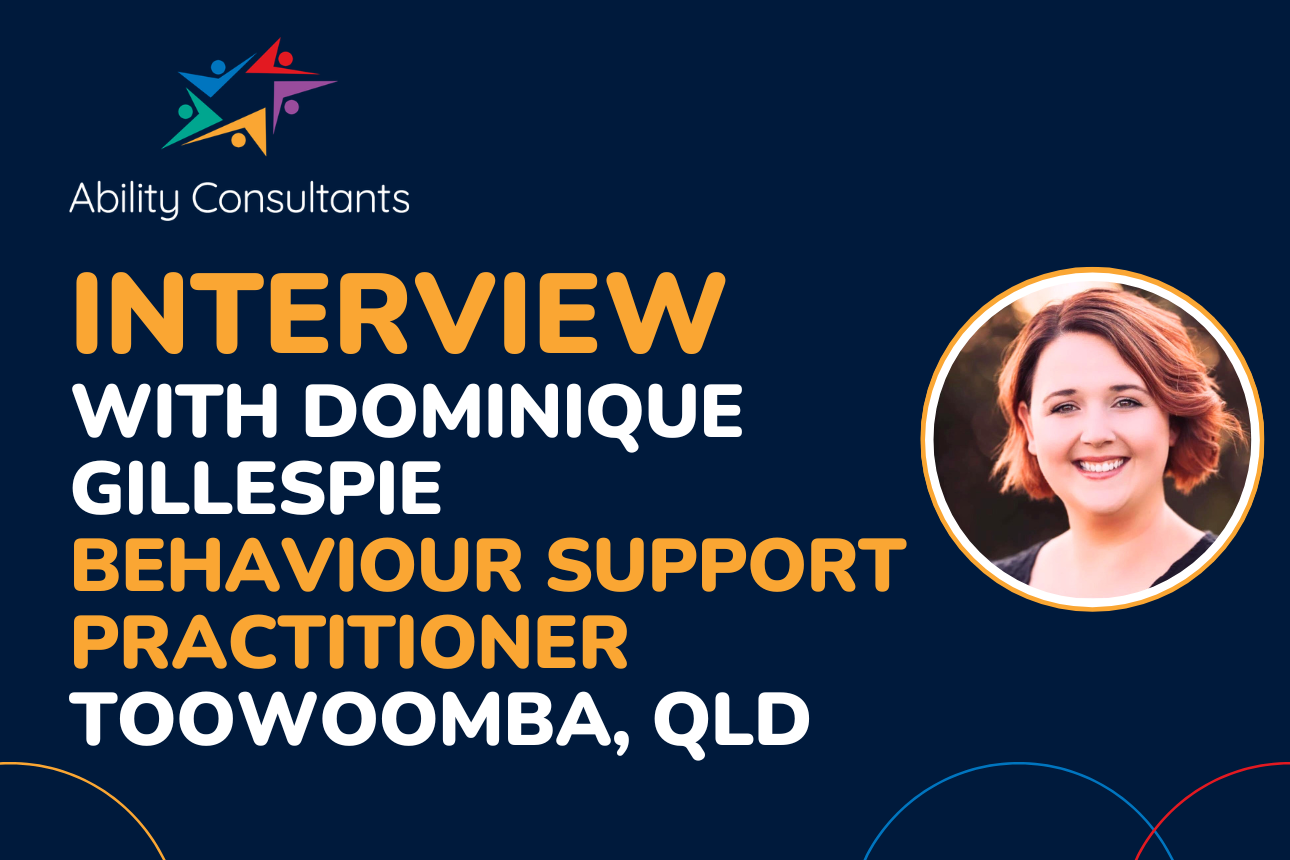
Meet Dominique Gillespie, Behaviour Support Practitioner in Toowoomba, Queensland
Hi Dominique, welcome to our team of behaviour support practitioners in Queensland! Tell us about you and life in Toowoomba.
I’m so excited to be part of the Ability Consultants Team.
I live and work in Toowoomba on the Darling Downs, a region known for its strong community connections and beautiful natural surroundings. Life here feels grounded and relational, people genuinely know and support one another. That community spirit shapes how I practice.
Professionally, I’m completing a Masters of Autism and Neurodivergence and I bring a background in law, leadership and governance. I also have lived experience as a parent of a child with a complex disability. That combination means I understand both the systemic side of disability services and the deeply personal side of navigating supports. My work is grounded in respect, human rights, and the belief that every person deserves to be understood and celebrated.
Tell us about your Autism and Neurodivergence degree.
The degree explores contemporary research in autism, neurodevelopmental differences, trauma-informed practice, communication, sensory processing and inclusive systems design.
A strong emphasis of my studies is moving away from deficit-based models and toward neuroaffirming, strengths-based practice. We critically examine historical approaches to disability and explore how to build environments that adapt to the person, rather than expecting the person to change who they are.
It’s academically rigorous, but also practical. I’m constantly translating research into real-world strategies.
How does your postgraduate studies in ASD and Neurodivergence inform your approach to Positive Behaviour Support?
My studies reinforce that behaviour is communication.
Rather than asking, “How do we stop this behaviour?” I ask:
- What is this person communicating?
- What need is unmet?
- What environmental changes are required?
- How can we increase safety, predictability and autonomy?
My academic learning strengthens my ability to:
- Conduct functional behaviour assessments with depth and nuance
- Recognise sensory, communication and trauma-related contributors
- Design supports that build skills rather than suppress behaviour
- Advocate for inclusive, rights-based practice
What are some key principles that might help the wider community if they are neurodivergent or they are a parent/caregiver of a neurodivergent person?
Whether you are a neurodivergent NDIS participant or a parent/carer, these principles can help:
- Behaviour is communication — Look beneath what you see.
- Connection before correction — Safety and trust come first.
- Co-regulation builds self-regulation — Calm adults support calm nervous systems.
- Environment matters — Lighting, noise, unpredictability and demands all impact behaviour.
- Presume competence — Even when communication is limited, understanding is often greater than it appears.
- Quality of life is the goal — Not simply reducing incidents.
Positive Behaviour Support Practitioner in Toowoomba
What can NDIS participants in Toowoomba expect from you as their behaviour support practitioner?
In regional communities like Toowoomba, access to high-quality, consistent behaviour support can significantly improve quality of life.
From my experience, families often feel exhausted by years of crisis management or misunderstood behaviour. My intention is to shift that narrative from “managing behaviours” to understanding unmet needs and creating sustainable change.
Because of my legal background, I am particularly attentive to human rights, duty of care and ethical obligations under the NDIS Quality and Safeguards Commission. I ensure documentation is thorough, compliant and meaningful. It’s not just paperwork, but a living guide for the team.
Because of my lived experience, I understand the emotional weight families carry. I know what it feels like to sit in case conferences, navigate school meetings and advocate for a child who cannot always advocate for themselves. That perspective shapes the way I communicate — clearly, compassionately and without jargon.
My goal is to provide exceptional, high-quality behaviour support that:
- Builds capacity, not dependency
- Empowers families and supports
- Creates measurable improvements in safety and wellbeing
- Improves long-term quality of life outcomes
For participants in Toowoomba, the Lockyer Valley and the Darling Downs, that means accessible, collaborative and genuinely person-centred support grounded in evidence, guided by ethics, and delivered with heart.
How do you deliver neuroaffirming Positive Behaviour Support in Toowoomba for NDIS participants with autism?
Delivering neuroaffirming Positive Behaviour Support means that I do not see neurodivergence as something to “fix.” I see it as a valid and meaningful way of experiencing the world.
My approach is shaped by three key influences: my background in law and governance, my postgraduate studies in autism and neurodivergence, and my lived experience as a parent navigating complex disability systems. Together, these have taught me that good support is not just technically sound. It must be ethical, practical, relational and respectful.
In practice, this means:
- I prioritise dignity, consent and autonomy in every interaction.
- I design strategies that adapt environments rather than forcing the person to mask or suppress who they are.
- I actively reduce reliance on restrictive practices and advocate for safer alternatives.
- I spend time understanding sensory processing differences, communication styles and trauma history before designing interventions.
- I collaborate closely with families, educators and support workers to ensure consistency and sustainability.
Being based in Toowoomba and the Darling Downs also matters. I understand the realities of regional life like limited services, workforce pressures, travel distances, and the need for practical, realistic strategies. I aim to provide support that is not only evidence-based but workable in real homes, real schools and real community settings.
Above all, neuroaffirming practice means listening, truly listening, to the person and those who know them best. Exceptional support is not about imposing expertise; it’s about building it together.
Depending on funding available, what outcomes can participants and their support teams expect from Positive Behaviour Support?
Depending on the level of funding available, Positive Behaviour Support can deliver both immediate stabilisation and long term capacity building.
I am transparent with families and teams about what can realistically be achieved within the allocated hours. My focus is always on using funding intentionally, ethically and in a way that creates sustainable change rather than short term fixes.
Outcomes may include:
A comprehensive Functional Behaviour Assessment
This is not a tick box exercise. A thorough assessment includes:
- Interviews with the participant and those who know them well
- Direct observation across settings such as home, school or community
- Analysis of patterns, triggers and maintaining factors
- Consideration of communication, sensory processing, trauma history and environmental demands
- Review of existing reports and historical data
The goal is to understand the function of behaviour within the context of the person’s life, not just describe what is happening.
A tailored, practical PBS Plan
The plan is written to be usable by real people in real environments. It will typically include:
- Clear explanation of behaviour function
- Proactive strategies to reduce triggers
- Skill building goals that increase independence
Communication supports - Reactive strategies that prioritise safety and dignity
- A plan for reducing and eliminating restrictive practices where applicable
I ensure the plan reflects the participant’s strengths, interests and long term goals, not just risk management.
Reduced frequency and intensity of behaviours of concern
When underlying needs are addressed and environments are adjusted, we often see:
- Fewer incidents
- Shorter duration of escalation
- Faster recovery time
- Increased early intervention before crisis point
The focus is on reducing distress rather than simply suppressing behaviour.
Increased communication skills
Behaviour often reduces naturally when communication increases. Outcomes may include:
- Development of functional communication strategies
- Improved self advocacy
- Clearer expression of needs, preferences and boundaries
- Increased use of visual or augmentative supports
This is particularly powerful for participants with complex communication needs.
Reduced reliance on restrictive practices
Where restrictive practices are in place, PBS provides a structured pathway to reduce and eliminate them safely. This includes:
- Careful data collection and monitoring
- Introducing alternative proactive supports
Training staff in preventative strategies - Regular review and accountability
Human rights and dignity are central to this process.
Greater confidence within the support team
Capacity building is a core part of my practice. Outcomes for teams may include:
- Increased understanding of behaviour function
Clear and consistent response strategies - Reduced burnout and stress
- Improved collaboration across home, school and providers
- Stronger documentation and data practices
When the adults feel confident and aligned, participants benefit immediately.
Improved daily participation and independence
Ultimately, Positive Behaviour Support should improve quality of life. This may look like:
- Increased attendance at school or day programs
- Greater participation in community activities
- Improved relationships within the family
- Increased independence with daily routines
- More predictable and calmer home environments
The importance of engagement and consistency
PBS is most effective when the whole team is engaged and consistent. Sustainable outcomes require:
- Open communication between providers
Willingness to reflect and adapt strategies - Ongoing review of data and progress
- Commitment to implementing proactive supports
My intention is not to create dependency on a practitioner, but to build a capable, informed team that can continue supporting the participant confidently over time.
When implemented well, Positive Behaviour Support does more than reduce behaviours of concern. It increases safety, dignity, participation and long term wellbeing.
Do you support NDIS participants in any specific age groups or with certain disabilities?
I support children, adolescents and adults across the lifespan.
My practice has particular strength in:
- Autism
- Intellectual disability
- Complex communication needs
What’s the next step for NDIS participants in Toowoomba?
The first step is to make a referral for Positive Behaviour Support on our website. You can do this anytime and you can make your own referral, or a member of your support team can make a referral on your behalf.
If you have any questions about Positive Behaviour Support, please feel welcome to call our team on 1300 694 625 or send a message using our contact form.
Positive Behaviour Support in Toowoomba: Frequently Asked Questions
What is Positive Behaviour Support?
Click here to view our video and article where Belinda explains Positive Behaviour Support.
How do I know if my NDIS Plan includes funding for behaviour support?
Where is your office in Toowoomba, QLD?
Ability Consultants is a Registered NDIS Provider in Toowoomba. We travel to you!
Do you deliver Positive Behaviour Support in all areas in Toowoomba?
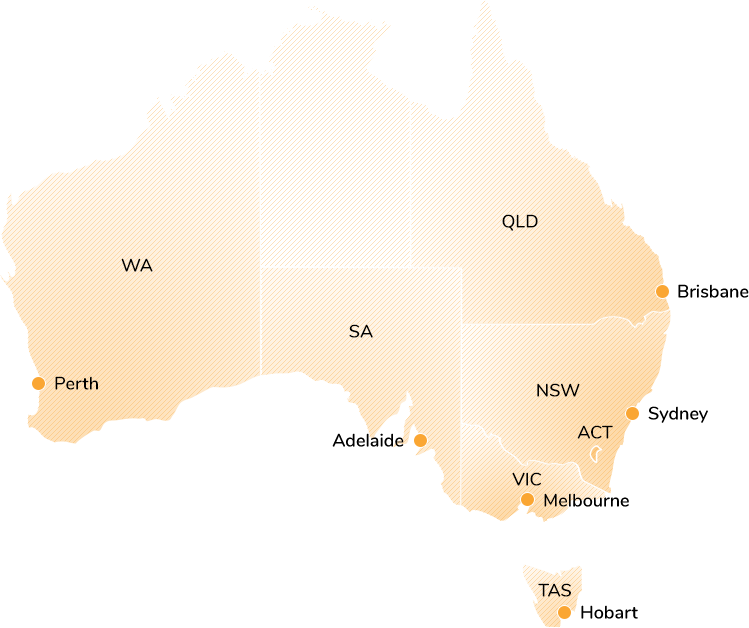
I provide Positive Behaviour Support in Toowoomba, as well as parts of the Lockyer Valley and Darling Downs. Towns include, but are not limited to:
Positive Behaviour Support in Toowoomba
- Centenary Heights
- Cotswold Hills
- Cranley
- Darling Heights
- Drayton
- Glenvale
- Harlaxton
- Harristown
- Kearneys Spring
- Middle Ridge
- Mount Lofty
- North Toowoomba
- Rangeville
- South Toowoomba
- Toowoomba
- Torrington
- Wilsonton Heights
Positive Behaviour Support in the Lockyer Valley:
- Adare
- Brightview
- Gatton
- Glenore Grove
- Grantham
- Heidon
- Kensington Grove
- Laidley
- Placid Hills
- Plainland
- Postmans Ridge
- Regency Downs
- Upper Lockyer
- Winwill
- Withcott
Positive Behaviour Support in Darling Downs:
- Balgowan
- Ballard
- Bowenville
- Brookstead
- Cabariah
- Cambooya
- Cawdor
- Cooyar
- Crowsnest
- Dalby
- Evergreen
- Gowrie Junction
- Hampton
- Highfields
- Highgrove
- Jondaryan
- Kingsthorpe
- Kleinton
- Meringandan
- Millmerran
- Mount Luke
- Oakey
- Pittsworth
- Quinalow
- Ravensbourne
- Rosalie Plains
- Southbrook
- Thornville
- Westbrook
- Wyreema

 Virtual
  In-person