



Autism, ADHD and Behaviour Support: A Q&A with Brisbane PBS Practitioner, Ben Standring
NDIS participants with Autism Spectrum Disorder (ASD) and Attention Deficit Hyperactivity Disorder (ADHD) can benefit from Positive Behaviour Support.
Around 300,000 Australians have been diagnosed with ASD, and of these, 73% experience profound or severe disability and 84% need daily support with at least one activity (Australian Bureau of Statistics 2022). Over 800,000 Australians live with ADHD, and although ADHD on its own is not typically covered by the NDIS, it commonly co‑occurs with Autism Spectrum Disorder (ASD) in a significant number of people.
In this Q&A, Behaviour Support Practitioner Ben Standring answers frequently asked questions about Autism, ADHD and Positive Behaviour Support.
Ben supports NDIS participants in Brisbane, in areas including Victoria Point, Capalaba, Cleveland and Redland Bay.
Autism, ADHD and Positive Behaviour Support
How can participants with ASD and ADHD benefit from Positive Behaviour Support?
Positive Behaviour Support (PBS) uses functional assessment and skill-building to reduce behaviours of concern (BOCs) by addressing underlying needs. For individuals with ASD and ADHD, it improves emotional regulation, predictability, and participation in daily life.
For example, PBS can:
- Identify triggers (e.g. sensory overload, task demand), and modify environments
- Teach replacement skills (e.g. requesting breaks to avoid escalation)
- Use visual supports and structured routines to reduce uncertainty
- Reinforce positive behaviours to build consistency and confidence
- Support co-regulation strategies with carers/educators

Can you share a specific example of how quality of life may improve for a child with ASD and ADHD, through Positive Behaviour Support?
Let’s look at a fictional example, “Liam”. Liam is a 10-year-old child with ASD Level 2 and ADHD who presents with aggressive outbursts (e.g. hitting and throwing objects) during homework tasks.
The identified goal is for Liam to independently engage in homework for 15 minutes without escalation on at least four out of five school days. Using a Positive Behaviour Support framework, a Functional Behaviour Assessment is conducted to identify the underlying function of the behaviour, which in this case is linked to task overwhelm and difficulty sustaining attention (Carr et al. 2002; Cooper et al. 2020).
Based on this formulation, environmental adjustments are implemented to reduce task demand and increase predictability. Homework tasks are broken into smaller, manageable 5-minute segments, and a visual schedule is introduced to provide structure and clarity, consistent with evidence-based supports for children with ASD and ADHD (Autism CRC 2022; National Institute for Health and Care Excellence 2018).
In parallel, Liam is explicitly taught replacement skills, including how to appropriately request a break using a visual card, and a structured “work–break” system is introduced using a timer. These strategies align with core Applied Behaviour Analysis principles of skill acquisition and functional communication training (Cooper et al 2020).

A reinforcement system is implemented to reward effort and task engagement rather than task perfection, supporting motivation and building self-efficacy. Additionally, Liam’s parents are coached to provide consistent responses and use co-regulation strategies to support emotional regulation, which is a key component of effective PBS and family-centred practice (NDIS Quality and Safeguards Commission 2021, Horner et al 2005).
As a result of these interventions, Liam demonstrates a reduction in aggressive incidents and is able to complete homework tasks with significantly less distress. He shows improved confidence in his abilities and increased emotional regulation, which generalises to improved participation in school-based tasks. These outcomes reflect the broader aim of PBS to enhance quality of life, not just reduce behaviours of concern (Carr et al 2002).
From a family perspective, there is a notable reduction in stress and conflict during evening routines. Liam’s parents report feeling more confident and consistent in their responses, and overall family relationships improve as routines become more predictable and manageable. This aligns with evidence demonstrating that PBS can positively impact overall family functioning and wellbeing (Horner et al 2005).
Adults on the autism spectrum who may or may not have ADHD may also face challenges in their day to day life. How can PBS help them achieve their goals?
Positive Behaviour Support for adults with ASD, with or without ADHD, focuses on promoting autonomy, functional independence, and meaningful participation in daily life domains such as employment, education, and social relationships. This is achieved by identifying and reducing environmental barriers while simultaneously building adaptive skills, consistent with a participation-focused framework (World Health Organization 2001; NDIS Quality and Safeguards Commission 2019).

For example, “Sarah” is a 27-year-old adult with ASD and ADHD who experiences frequent workplace shutdowns and absenteeism due to overwhelm in a busy open-plan office environment. Her goal is to sustain part-time employment (three days per week) with minimal distress. A Functional Behaviour Assessment identifies key triggers, including sensory sensitivities to noise, unclear task expectations, and difficulty managing task-switching demands (Carr 2002).
In response, a range of environmental modifications are introduced to better align the workplace with Sarah’s needs. These include the use of noise-cancelling headphones to reduce auditory input and the provision of clear, written task lists to improve predictability and reduce cognitive load. Such adjustments are consistent with recommended workplace supports for individuals with ADHD and autism (National Institute for Health and Care Excellence 2019).
Alongside environmental changes, Sarah is supported to develop key adaptive skills, including self-advocacy (e.g. requesting clarification or breaks when needed) and executive functioning strategies such as time-blocking and task chunking. Regulation supports, including scheduled breaks and access to a sensory toolkit, are also implemented to proactively manage stress levels. Collaboration with her employer ensures that reasonable adjustments are embedded and sustainable, consistent with best-practice PBS and person-centred planning (NDIS Quality and Safeguards Commission 2019).
As a result of these supports, Sarah demonstrates improved job retention and performance, with a significant reduction in shutdown episodes and absenteeism. She reports lower levels of burnout and improved emotional regulation, alongside increased confidence in her ability to manage workplace demands. Importantly, her increased capacity to sustain employment also enhances her social participation and overall quality of life, reflecting the core goal of PBS to support meaningful and self-directed living (World Health Organization 2001).
What does it mean to provide neuroaffirming Positive Behaviour Support?
Neuroaffirming PBS is closely aligned with person-centred and rights-based practice. It emphasises dignity, autonomy, and the least restrictive approach, consistent with expectations outlined by the NDIS Quality and Safeguards Commission. Success is not measured solely by the reduction of behaviours of concern, but by improvements in quality of life, including increased participation, wellbeing, and the individual’s ability to engage in environments that are supportive and inclusive (World Health Organization 2001).
About Ben Standring, Behaviour Support Practitioner in Brisbane
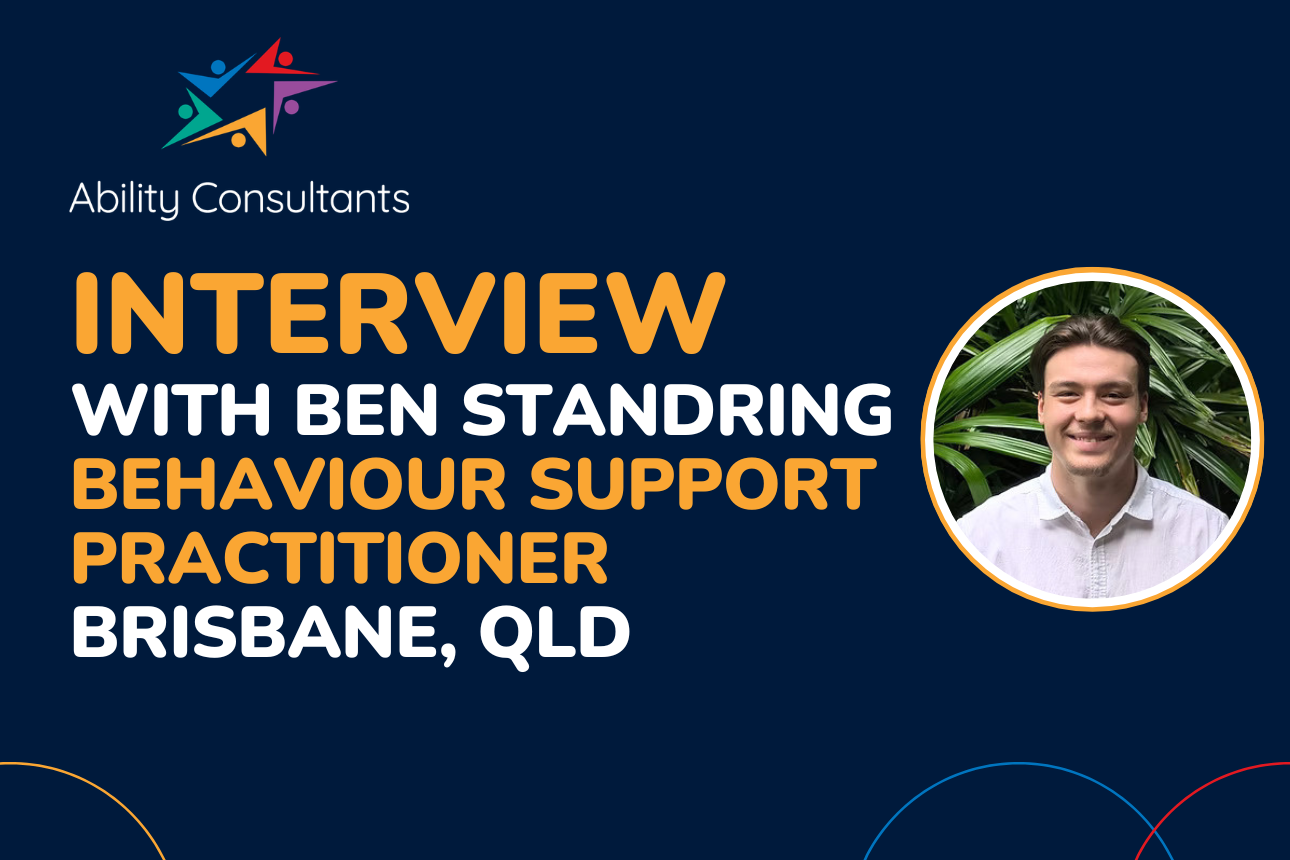
Ben, welcome to our team of behaviour support practitioners in Brisbane! Tell us about you!
I am a current student at Griffith University completing my Honours in Psychological Science, as well as studying a diploma in Counselling through the Australian Institute of Professional Counselling. I’m especially passionate about supporting individuals with ASD and ADHD, and helping create strategies that genuinely improve quality of life—not just reduce behaviours of concern. Outside of work, I enjoy participating in sports such as rugby league and going to the gym.
You’re studied psychological science and counselling — why did you choose to study these fields?
I chose to study psychological science and counselling because I’ve always had a strong interest in understanding human behaviour—what drives people, how they think, and how different experiences shape the way they respond to the world.
A lot of my decision was influenced by the people I’ve met and the experiences I’ve had over time, which really reinforced my interest in supporting others in a meaningful way. Through both study and practical experience, I’ve come to really value approaches that focus on understanding the underlying reasons behind behaviour, rather than just addressing things at a surface level.
My main goal is to continue developing my knowledge, both within my professional role and in my own time, so I can build the skills needed to provide effective, person-centred support to those who need it.
How has your experience in the disability sector influenced your approach to Positive Behaviour Support?
Since beginning in the disability sector around four years ago, I’ve had an amazing opportunity to work closely with a wide range of participants, families, and providers, which has really shaped my approach to Positive Behaviour Support.
Through my experience in Support Coordination, I’ve seen first-hand how behaviours of concern are often linked to unmet needs, environmental stressors, or gaps in support. That exposure has reinforced the importance of taking a holistic, person-centred approach—focusing on understanding the “why” behind behaviour rather than reacting to the behaviour itself.
It has also highlighted how critical consistency and collaboration are. Working alongside families, therapists, and support teams showed me that the best outcomes happen when everyone is aligned, using proactive strategies and clear communication.
Overall, my experience has led me to value approaches that are practical, strengths-based, and focused on improving quality of life, not just reducing behaviours. It’s something I’m really motivated to continue developing as I grow in this space.
Your practice is grounded in person-centred, trauma-informed and strengths-based approaches — what does this mean?
A person-centred approach means really getting to know the individual—their goals, preferences, values, and what a good life looks like for them—and ensuring that any strategies or supports align with that, rather than taking a one-size-fits-all approach.
Being trauma-informed means recognising that past experiences can have a significant impact on how someone responds to situations in the present. It’s about creating a safe, predictable environment, avoiding re-traumatisation, and approaching behaviours with curiosity and understanding rather than judgement.
A strengths-based approach means identifying and building on the person’s existing skills, interests, and capabilities. Instead of focusing purely on deficits or behaviours of concern, I aim to use what’s already working as a foundation to build confidence, independence, and more positive outcomes.
When these approaches are combined, it leads to support that is respectful, collaborative, and focused on improving quality of life in a way that is meaningful to the individual.
Do you support NDIS participants in any specific age groups or with certain disabilities?
Through my previous experience in the disability sector, I’ve had strong exposure to supporting children, adolescents, and young adults. That said, I’m also excited to continue building my experience working with adults.
Do you deliver Positive Behaviour Support in all suburbs near Victoria Point?
Our team supports NDIS participants throughout Brisbane. I primarily provide PBS in Redland City, Brisbane, Logan, including but not limited to:
Redland City
Alexandra Hills, Birkdale, Capalaba, Cleveland, Heathfield, Mount Cotton, North Stradbroke Island, Ormiston, Redland Bay, Sheldon, Thorneside, Victoria Point, Wellington Point
Brisbane City
Belmont, Birkdale, Burbank, Carina, Carina Heights, Chandler, Gumdale, Lota, Mackenzie, Manly, Manly West, Gumdale, Tingalpa, Wynnum
Logan City
Loganholme, Park Ridge, Shailer Park, Springwood, Underwood, Meadowbrook, Crestmead, Tanah Merah, Greenbank
How can Brisbane residents get started with Positive Behaviour Support?
NDIS participants in Brisbane can make a referral for Positive Behaviour Support on our website. You can do this anytime and you can make your own referral, or a member of your support team can make a referral on your behalf.
If you have any questions about Positive Behaviour Support, please feel welcome to call our team on 1300 694 625 or send a message using our contact form.
Contributors
Written by Ben Standring BPsychSc(Hons) (Griffith) (in progress), DipCoun (in progress), Behaviour Support Practitioner, Brisbane
Ben’s practice is grounded in person-centred, trauma-informed and strengths-based approaches. He supports individuals with ASD, acquired brain injury (ABI), psychosocial disorders, major depressive disorder and attention deficit hyperactivity disorder (ADHD).
Reviewed by Indi Taylor PGDipPsych (JCU), BA/BEd (SCU), AdvDipCSC, Cert IV TAE, Senior Behaviour Support Practitioner and Team Leader, Cairns
Indi’s practice is grounded in person-centred, trauma-informed, and strengths-based approaches. She works with adults with complex presentations including ASD, psychosocial disability, neurodegenerative conditions, and post-stroke support, with a strong focus on dignity, freedom, capacity, and risk.
References
Australian Bureau of Statistics 2022, “Autism in Australia, 2022: key findings in plain language”, Australian Bureau of Statistics.
Autism CRC 2022, “National guideline for supporting the learning, participation, and wellbeing of autistic children and their families”, Autism CRC.
Autistic Self Advocacy Network 2026, “Position statements and resources on neurodiversity and rights-based approaches”, Autistic Self Advocacy Network.
Carr, EG, Dunlap, G, Horner, RH, Koegel, RL, Turnbull, AP, Sailor, W, Anderson, J L, Albin, RW, Koegel LK & Fox, L 2002, “Positive behavior support: Evolution of an applied science” Journal of Positive Behavior Interventions, 4(1), 4–16.
Cooper, J, Heward, W & Heron, T 2020, Applied Behavior Analysis, 3rd ed, Pearson.
Horner, RH, Dunlap, G, Koegel, RL, Carr, EG, Sailor, W, Anderson, J, Albin, RW, & O’Neill, RE, 2005, “The impact of positive behavior support on family quality of life”, Journal of Positive Behavior Interventions, 7(3), 165–173.
Kapp, S, 2020, Autistic community and the neurodiversity movement: Stories from the frontline, Palgrave Macmillan, Exeter, UK.
National Institute for Health and Care Excellence, 2013, “Autism spectrum disorder in under 19s: Support and management”, National Institute for Health and Care Excellence.
National Institute for Health and Care Excellence, 2018, “Attention deficit hyperactivity disorder: Diagnosis and management”, National Institute for Health and Care Excellence
NDIS Quality and Safeguards Commission, 2021, “NDIS Practice Standards and Quality Indicators”, NDIS Quality and Safeguards Commission.
NDIS Quality and Safeguards Commission, 2019, Positive Behaviour Support Capability Framework, NDIS Quality and Safeguards Commission
NDIS Quality and Safeguards Commission, 2021, Regulated Restrictive Practices Guide, NDIS Quality and Safeguards Commission
May, T, 2025, “Attention Deficit Hyperactivity Discorder (ADHD)”, Brain Foundation
Schalock, RL, Brown, I Cummins, R, Felce, D, Matikka, L, Keith, K & Parmenter T, 2002,
“Conceptualization, measurement, and application of quality of life for persons with intellectual disabilities: Report of an international panel of experts”, Mental Retardation, 40(6), 457–470.
World Health Organization, 2001, “International classification of functioning, disability and health (ICF)”, World Health Organisation

 Virtual
  In-person